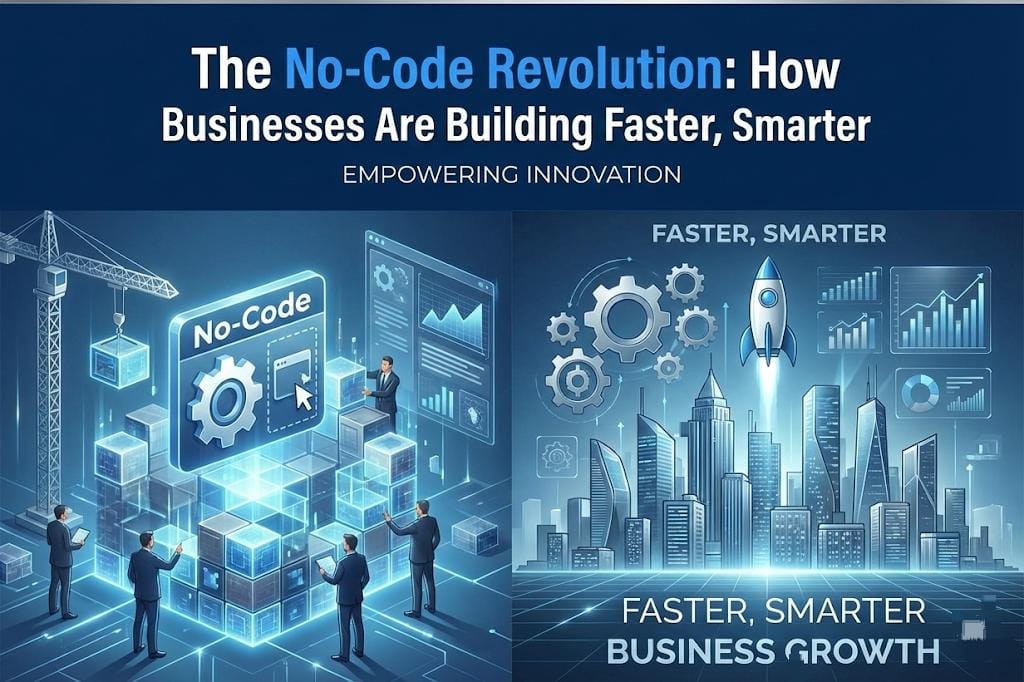
The No-Code Revolution: How Businesses Are Building Faster, Smarter
In today's fast-paced business world, the ability to adapt, innovate, and launch new initiatives quickly is no longer an advantage – it's a necessity. For too long, brilliant business ideas have been held captive by long development cycles, high costs, and the technical complexities of software creation. But what if your strategic vision could become a functional solution not in months, but in weeks, or even days?
Welcome to the era of No-Code. This isn't just a trend; it's a fundamental shift in how businesses can leverage technology to drive growth, efficiency, and competitive edge, all without writing a single line of complex code.
Need a custom digital solution? Let's discuss your project.
Get a free consultation and quote today.
The Shift: What Is Changing Right Now?
For decades, building any significant digital tool – whether an internal system, a customer portal, or a new product – required a specialized team of software developers. This process was often slow, expensive, and created a bottleneck between a business need and its technical solution. Ideas would wait, resources would be strained, and market opportunities could be missed.
No-code tools are changing this dynamic entirely. They provide visual interfaces, drag-and-drop functionalities, and pre-built components that allow non-technical business users – from marketing managers to HR leads to operations directors – to create sophisticated applications and automated workflows. Think of it as moving from custom-building every single brick and beam for a house to assembling a highly customized structure from advanced, ready-to-use modules.
This shift empowers departments to solve their own problems, develop their own solutions, and iterate on them with unprecedented agility, drastically reducing reliance on centralized IT departments for every single request.
The Opportunity: Why Early Adopters Win
Embracing no-code now isn't just about efficiency; it's about gaining a significant competitive advantage. Early adopters are already seeing tangible benefits:
- Unprecedented Speed to Market: Launch new services, products, or internal tools in a fraction of the time, allowing you to react swiftly to market changes and seize opportunities before competitors.
- Significant Cost Reduction: Dramatically lower development and maintenance costs. No need for large, specialized development teams for every project, allowing resources to be reallocated strategically.
- Empowered Innovation: Foster a culture where any team member with a problem can build a solution. This democratizes innovation, leading to a wider range of creative ideas being tested and implemented.
- Enhanced Business Agility: Adapt your digital infrastructure rapidly as business needs evolve. Modify workflows, update applications, and integrate new functionalities on the fly, keeping your business responsive and resilient.
- Focus on What Matters: Free up your technical teams to focus on core, complex, high-value initiatives, while business units handle their specific application needs.
Real-World Applications: Three Concrete Examples
The beauty of no-code lies in its versatility. Here are just a few ways businesses are already leveraging these powerful tools:
- Automating Customer Onboarding & Support: A growing e-commerce business uses a no-code platform to build a custom customer portal. This portal allows customers to track orders, manage subscriptions, and access FAQs without needing human intervention for every query. It also automates the onboarding process for new clients, sending welcome emails and setting up initial service configurations based on their purchase.
- Streamlining Internal Operations: An HR department builds a custom applicant tracking system (ATS) and onboarding workflow. Recruiters can manage candidates, schedule interviews, and track progress visually, while new hires automatically receive necessary documents, training schedules, and team introductions, all without IT involvement.
- Rapid Product Prototyping and MVPs: A startup with a disruptive idea uses no-code to build a fully functional Minimum Viable Product (MVP) for investor pitches and early user testing. Instead of spending six months and hundreds of thousands on custom development, they validate their concept in a few weeks, securing funding and refining their offering based on real user feedback.
The Risk: The Cost of Ignoring This Shift
In a world accelerating its digital transformation, standing still is equivalent to falling behind. Ignoring the no-code revolution carries substantial risks:
- Loss of Competitive Edge: Your competitors will be moving faster, launching new services, and optimizing operations at a pace you simply can't match with traditional development cycles.
- Increased Operational Costs: Continuing to rely on expensive, time-consuming custom development for every digital need will inflate your budget and delay critical projects.
- Stifled Innovation: Restricting the ability to build and test new ideas to a small group of technical experts limits your organization's capacity for creativity and problem-solving.
- Talent Drain: Top talent, especially younger generations, expects modern, agile tools. A company stuck in old ways may struggle to attract and retain the best employees.
- Missed Market Opportunities: The inability to quickly launch new initiatives means you'll consistently miss out on emerging market trends and customer demands.
Prediction: The Next 12-24 Months
The trajectory for no-code is clear: mainstream adoption and increasing sophistication. In the next one to two years, we predict:
- "Citizen Developers" Will Become a Standard Role: More and more non-technical roles will incorporate application building as part of their day-to-day responsibilities, becoming internal experts.
- No-Code Will Integrate Deeper with AI: Expect no-code platforms to seamlessly incorporate AI and machine learning capabilities, allowing businesses to build smart automations, predictive analytics tools, and more sophisticated applications without specialized AI development.
- Enterprise-Grade Security & Scalability: No-code platforms will continue to mature, offering robust security, compliance features, and the ability to scale solutions for large organizations.
- Hybrid Development Will Dominate: The lines between no-code and traditional coding will blur. Businesses will use no-code for rapid prototyping and front-end experiences, while developers focus on complex integrations and backend systems, creating a powerful synergy.
- A Strategic Imperative, Not Just a Tool: Adopting no-code will shift from a tactical advantage to a core strategic component of any forward-thinking business's digital transformation roadmap.
Preparation Checklist: How to Embrace No-Code
Ready to empower your business with no-code? Here's a practical checklist to guide your journey:
- Educate Your Leadership & Teams: Start with awareness. Explain the benefits, capabilities, and strategic importance of no-code to key stakeholders and potential "citizen developers."
- Identify Key Pain Points: Where are your current bottlenecks? Which manual processes consume too much time? These are ideal starting points for no-code solutions.
- Start Small, Think Big: Don't try to overhaul everything at once. Begin with a pilot project in a single department to demonstrate value and build confidence.
- Choose the Right Platform & Partner: Research platforms that align with your business needs. Consider partnering with experts (like our agency!) to help identify the best tools and guide initial implementation, ensuring you make informed decisions.
- Foster a Culture of Experimentation: Encourage teams to play, build, and innovate. Provide basic training and resources to empower them.
- Plan for Integration: Consider how no-code solutions will connect with your existing systems and data sources to ensure seamless operations.
The no-code revolution isn't coming; it's here. Businesses that embrace this powerful shift will be the ones that innovate faster, operate smarter, and ultimately, lead their markets in the years to come.